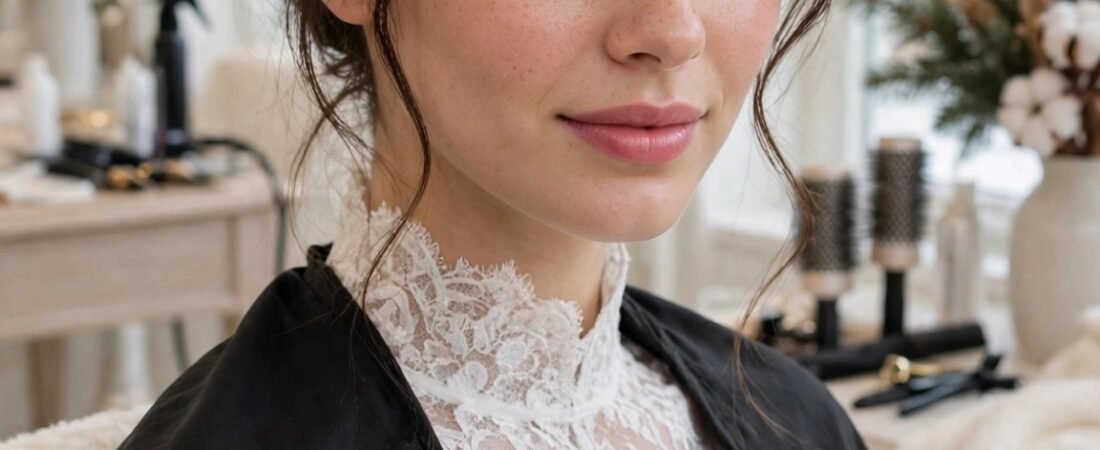
Choosing your wedding hairstyle is one of the loveliest parts of planning a winter wedding. Your hair frames your face in every photograph, it works with your gown and your veil, and it needs to feel comfortable from the first look in the morning to the last dance at night. A little planning now will save you stress later and help you walk down the aisle feeling calm and beautiful.
Winter brings its own joys and challenges, from crisp air and soft snow light to cold wind and warm indoor heating. The best bridal hairstyles for 2026 balance beauty with practical care, so your style holds through every moment. These twelve tips will guide you through trials, veils, necklines and weather proofing, so you can choose a look you truly love.
1. Match Your Hair to Your Neckline
Your neckline should guide your hairstyle more than any trend. A high neckline looks best with hair swept up so the detail of the gown stays visible and the overall line feels clean. A sweetheart or V neck leaves room for softer styles, so let your neckline decide the shape first and then add the finishing detail.
2. Match Your Hair to Your Veil Length
Your veil length and your hairstyle need to work as one team. A long cathedral veil sits best with a low bun or a low chignon that anchors the veil securely at the back of the head. A short birdcage or fingertip veil leaves more freedom, so soft waves or a half up style can shine without the veil hiding the shape.
3. Book a Trial Early
Book your hair trial early, ideally two to three months before the wedding. An early trial gives you time to try different shapes, to change your mind without pressure, and to order any accessory you fall in love with. It also lets your stylist learn your hair, from how it holds a curl to how much volume it can carry, long before the big day.
4. Weather Proof Against Wind and Snow
Winter wind and snow can flatten a style fast, so weather proofing matters. Ask your stylist for a strong hold finish that still feels soft, and use a light serum on the ends to guard against damp air. If your ceremony is outdoors, choose a style with a secure base, such as a pinned updo, and carry a small umbrella for the walk between venues.
5. Choose an Updo for High Neck Gowns
An updo is a natural partner for a high neck gown. Sweeping the hair up opens the neckline, shows off lace or beading at the collar, and creates an elegant long line through the shoulders. A classic chignon, a textured bun or a twisted updo all work well, so choose the version that feels most like you and suits your face shape.
6. Choose Waves for Off Shoulder Gowns
Soft waves are a dream with an off shoulder gown. The open neckline and bare shoulders leave space for hair to fall gently, and waves add movement and romance without hiding the gown. Ask for large loose waves rather than tight curls, and keep one side swept back with a pin so your face stays clear in photographs.
7. Plan for Indoor and Outdoor Photos
Plan your hairstyle for both indoor and outdoor photographs. Outdoor winter light is soft and flattering, but wind can lift loose strands, while warm indoor air can soften a curl. Choose a style that looks good from every angle and ask your stylist for extra pins at the sides, so you can move between locations without needing a full restyle.
8. Bring Reference Photos
Bring reference photos to your trial, and bring more than one. Photos help your stylist see what you love, from the height of a bun to the softness of a wave, far better than words alone. Choose images of brides with a similar hair length and colour to yours, and note what you like about each one so your stylist can blend the best parts into a look made for you.
9. Test Accessories at the Trial
Test every accessory at your trial, not on the wedding morning. Bring your veil, your headband, your comb or your pins, and let your stylist place each piece exactly where it will sit on the day. This is the time to discover if a heavy comb slips, if a headband presses, or if a veil comb needs a stronger anchor, while there is still time to fix it.
10. Schedule Hair Before Makeup
Schedule hair before makeup on your wedding morning. Hair styling can create heat and movement around your face, and a finished makeup look is easier to protect once the hair is set. Ask your stylist and your makeup artist to agree a running order, leave a little buffer time between them, and enjoy a calm morning without rushing either part of your look.
11. Pack a Touch Up Kit
Pack a small touch up kit and give it to a bridesmaid you trust. Include a few extra pins in your hair colour, a mini hairspray, a soft brush, a few tissues and a small mirror. A quick check after the ceremony and before the reception keeps flyaways smooth and your style fresh, and it takes only a minute to do.
12. Have a Backup Style Ready
Have a backup style ready in case the weather changes your plan. If you hoped for loose waves but the forecast brings strong wind, a low bun or a braided updo can save the day without losing the romance. Talk through the backup with your stylist at the trial, so you both know the plan and you can switch with confidence if you need to.
How to Plan Your Winter Bridal Hair
Start by gathering inspiration that feels true to you, then narrow it to two or three favourite looks. Think about your gown, your veil, your venue and the season together, because a style that suits a summer garden may not suit a winter hall. Share your shortlist with your stylist at the trial and be open to their advice on what your hair can hold.
Care for your hair in the weeks before the wedding with gentle washing, regular conditioning and very little heat. Healthy hair holds a style better and shines more in photographs. Avoid a dramatic cut or colour close to the day, and drink plenty of water and rest well the night before. On the morning, arrive with clean dry hair unless your stylist asks otherwise, and bring your veil and accessories so the full look comes together in one calm session.
Frequently Asked Questions
When should I book my bridal hair trial?
Book your trial two to three months before the wedding. This gives you time to try ideas, to order accessories, and to book a second trial if you change your mind. An early trial also helps your stylist plan the timing for the wedding morning.
Should I wear my hair up or down for a winter wedding?
Choose based on your gown, your veil and the weather. An updo suits high neck gowns and windy days, while soft waves suit off shoulder gowns and calm indoor settings. Your trial is the best place to see which option feels most comfortable and looks best with your dress.
How do I keep my hairstyle safe in snow?
Choose a secure base such as a pinned updo, use a strong hold spray, and keep a small umbrella handy for walks outdoors. A light serum on the ends guards against damp air. Ask your stylist for a few extra pins so loose strands can be tucked back quickly.
Can I change my hairstyle between the ceremony and reception?
Yes, many brides make a small change, such as letting an updo down into soft waves or adding a sparkle pin. Keep the change simple and agree it with your stylist in advance. Allow ten to fifteen minutes in your schedule so the change feels relaxed rather than rushed.
What should I bring to my hair trial?
Bring your veil, your chosen accessories, reference photos and a photo of your gown if you have one. Wear a top with a neckline similar to your gown so you can judge the full effect. Bring a friend whose opinion you trust, and take photos from every angle to review at home.
Conclusion
Your winter bridal hairstyle should feel like you on your very best day. Plan early, try your ideas with your veil and your gown, and choose a style that can weather a little wind and still shine in every photograph. With a good trial and a calm plan, you will feel beautiful, comfortable and ready to enjoy every moment.