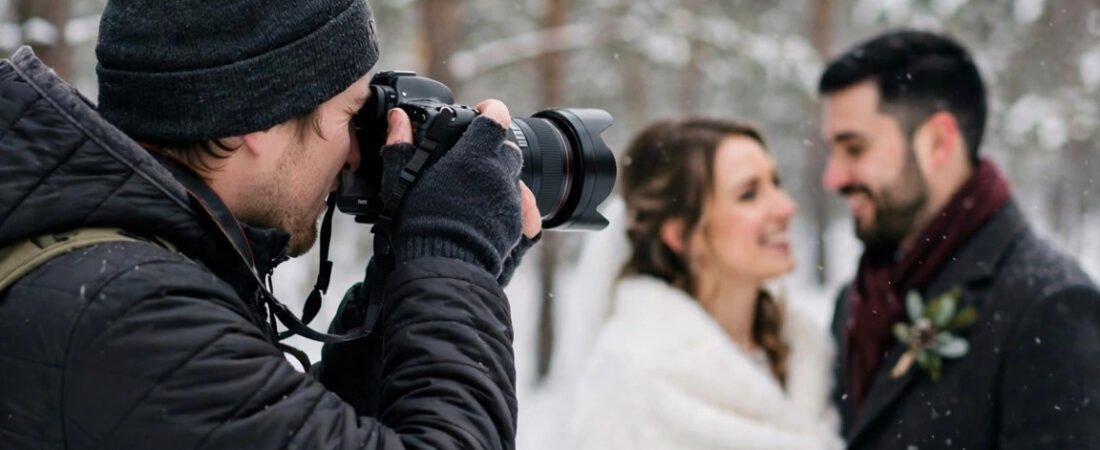
A winter wedding can give you some of the most beautiful photos of your life, with soft snow, glowing lights, and a cozy romance that summer simply cannot match. It also brings early sunsets and cold weather. The good news is that with smart planning, the right photographer, and a few simple habits, you can stay warm, relaxed, and radiant in every frame. This guide shares twelve practical tips for 2026, from choosing your photographer to building a shot list and a weather backup plan, so you can enjoy your day and come home with an album you truly love.
1. Choosing a Winter Experienced Photographer
Choosing a photographer with real winter experience is the most important decision you will make for your photos. Look for full galleries from cold weather weddings, not just a few snowy highlights, and notice how they handle low light, pale skin tones, and outdoor portraits. Ask how many winter weddings they have photographed and how they keep couples comfortable, then choose someone whose work makes you feel at ease.
2. Planning Around the Early Sunset
Winter sunsets arrive early, often in the late afternoon, so your whole timeline should be built around the light you love most. Work backwards from sunset when you plan your ceremony, family photos, and couple portraits, and reserve the golden hour for your most romantic images. Talk with your photographer about the exact sunset time for your date and venue, and keep a small buffer in the schedule so you never feel rushed.
3. Keeping Warm Between Shots
Staying warm helps you look relaxed and happy, while shivering and stiff shoulders show clearly in photos. Bring a beautiful faux fur stole, a stylish coat, or a warm shawl that matches your outfit, and keep hand warmers in your pockets for quick comfort. Plan short outdoor sessions of ten to fifteen minutes, then step inside to warm up with a hot drink before your next set of portraits.
4. Timeline Planning
A thoughtful timeline is the secret to calm and beautiful winter wedding photos. Build in extra time for travel on snowy roads, for warming up indoors, and for portraits in the best light. Share your timeline with your photographer, your planner, and your wedding party in advance, and keep the portrait list short and focused so everyone stays energized and smiling.
5. Lighting Gear and Flash
Good lighting makes all the difference in winter, when daylight is soft, short, and often grey. Ask your photographer what lighting gear they bring, including off camera flash, video lights, and reflectors, and how they use it to create warm and flattering portraits indoors and out. A skilled photographer can turn a dark hall into a glowing and romantic setting, so trust their tools and their eye for light.
6. Posing in Cold Weather
Posing in cold weather works best when you keep moving gently and stay close together for warmth. Lean into your partner, hold hands, walk slowly through the snow, and let natural laughter replace stiff and formal poses. Ask your photographer for prompts that encourage movement and connection, like a slow walk, a forehead kiss, or a shared laugh, so your photos feel warm and alive.
7. Protecting Cameras From Cold and Snow
Cold and snow can challenge cameras, batteries, and lenses, so good preparation protects your photos. Professional photographers bring spare batteries kept warm in pockets, lens cloths for snowflakes, and waterproof covers for their gear. You can help by choosing sheltered spots for portraits, keeping equipment breaks short, and trusting your photographer to pause and protect their gear when the weather turns harsh.
8. Backup Indoor Locations
Every winter wedding needs beautiful backup indoor locations in case of heavy snow, rain, or strong wind. Scout your venue for large windows, elegant staircases, fireplaces, conservatories, and cozy lounges that photograph well in any weather. Share these spots with your photographer before the day, and plan a short indoor portrait session even if the weather is fine, so you have a warm and stunning set of images.
9. What to Ask Your Photographer
Asking the right questions before you book helps you avoid stress and surprises on the day. Ask about their winter experience, their backup gear and second shooter, their plan for low light and bad weather, their turnaround time, and how many edited images you will receive. Also ask how they handle family photos, how long portraits usually take, and what happens if they are unwell, so you feel fully prepared and confident.
10. Budgeting
Budgeting wisely for winter wedding photography means understanding what is included and where the value lies. Compare packages by the hours covered, the number of edited photos, the album and prints, and travel costs, not just the headline price. Set aside a small reserve for extra hours or a beautiful album, and remember that great photography is one of the few parts of your day that lasts forever.
11. Shot List
A clear shot list helps your photographer capture every person and moment that matters to you, without missing anyone important. List your must have family groupings, your wedding party, your ceremony details, and any special items like heirlooms, rings, and gifts. Keep the list realistic and share it at least two weeks before the wedding, then trust your photographer to capture the candid moments in between.
12. Weather Backup Plan
A weather backup plan gives you peace of mind, whatever the forecast brings. Check the forecast in the final week, confirm indoor spaces with your venue, and agree with your photographer on a flexible order for portraits so you can move indoors quickly if snow or rain arrives. Pack clear umbrellas, warm wraps, and suitable shoes, and embrace the weather with joy, since snow and soft light often create the most magical photos of all.
How to Plan a Smooth Winter Wedding Photo Day
Start planning your photo day at least two months before the wedding, with a meeting or call with your photographer to discuss light, locations, and timing. Visit your venue together if possible, and walk through the ceremony space, the reception room, and the outdoor spots you love, noting where the light falls and where you can warm up. Build your timeline around sunset, with family photos first, couple portraits during golden hour, and a short blue hour session if you love twilight. Pack a small photo kit with hand warmers, a warm wrap, touch up makeup, and comfortable shoes for walking between locations. On the day, stay hydrated, eat well, and take short breaks indoors so you stay energized and glowing. Communicate kindly with your photographer, share your priorities, and then enjoy the celebration, trusting that the planning you did will shine through in every image.
Frequently Asked Questions
1. How early should we book a winter wedding photographer?
Book eight to twelve months in advance for popular winter dates, since experienced photographers fill their calendars quickly. Early booking also gives you time for a planning meeting, a venue visit, and a relaxed engagement shoot in winter light.
2. What time is best for winter wedding portraits?
The best light is usually in the early to mid afternoon, with golden hour just before sunset and blue hour just after. Plan your main portraits for that window, keep sessions short, and use indoor locations for the rest of your photos.
3. How do we stay warm without ruining our outfits?
Choose a stylish coat, stole, or shawl that complements your look, wear warm layers underneath, and use hand warmers between shots. Short outdoor sessions and warm indoor breaks keep you comfortable and help you look relaxed in every photo.
4. What if it snows heavily on our wedding day?
Heavy snow can create stunning photos, but safety comes first, so follow your venue and photographer guidance. Use sheltered spots, clear umbrellas, and indoor locations, and keep travel times flexible so everyone arrives safely and calmly.
5. How many photos will we receive from a winter wedding?
Most couples receive several hundred edited images, depending on hours covered and the package chosen. Ask your photographer for their usual number, their editing style, and their delivery time before you book, so you know what to expect.
Your winter wedding photos will become one of your most treasured keepsakes, a way to relive the warmth, laughter, and love of a truly special day. With an experienced photographer, a thoughtful timeline, warm layers, and a flexible plan for light and weather, you can face the season with confidence and joy. Remember to pause, breathe, and enjoy the moments that matter, from start to finish. The snow, the candlelight, and the cozy atmosphere are already on your side, and with these twelve tips, your photos will capture all of it beautifully for years to come.